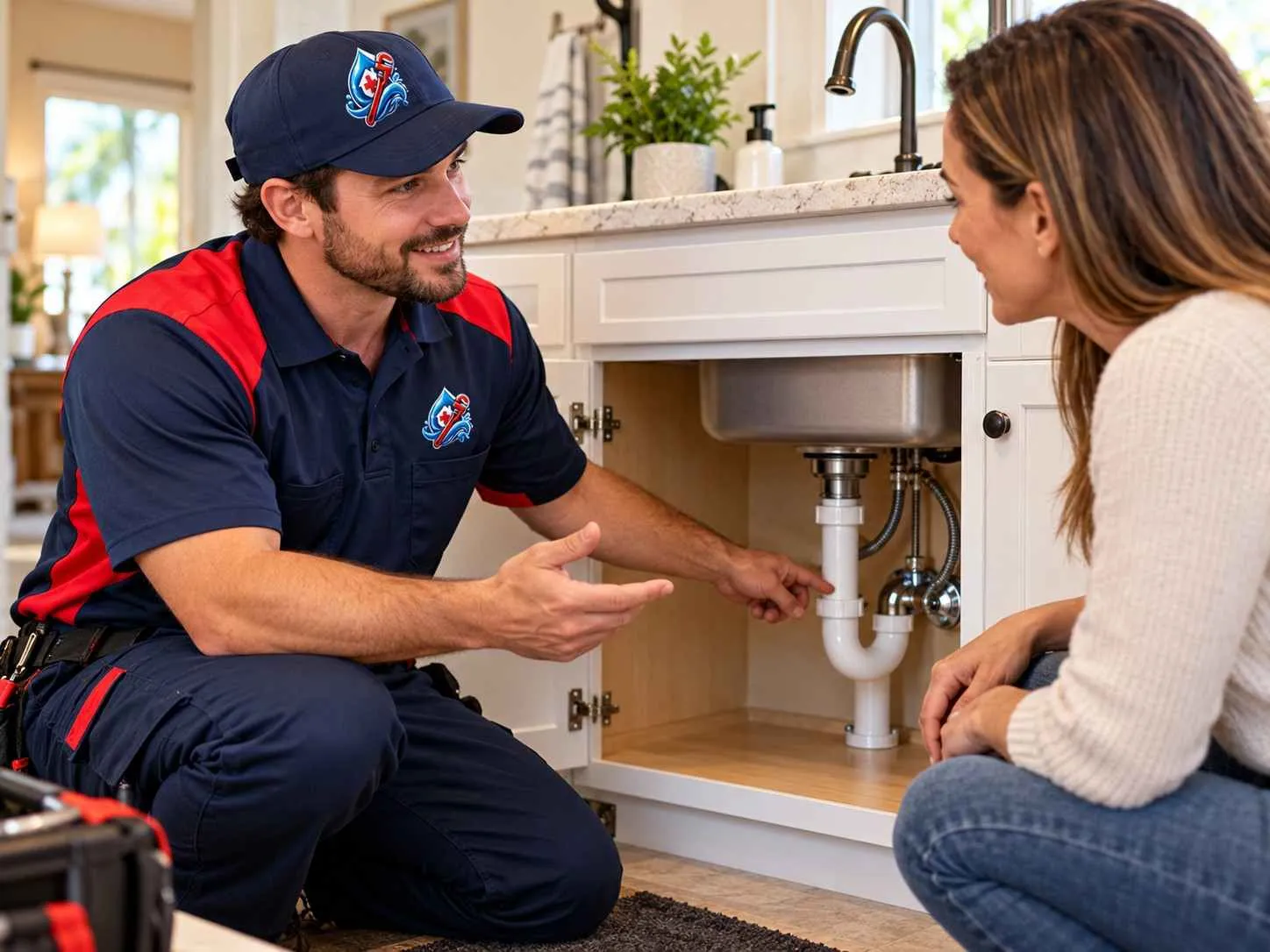
Kitchen Sink
Food particles and grease can restrict the sink trap or nearby kitchen drain. A plumber assesses the obstruction and access before clearing it.
Blocked Drain Help
When one sink, shower or bathtub stops draining, you may need help clearing its local drain path. Call Plumb Rescue to request assistance from an independent contractor for the blocked fixture.
Fixture Coverage
Localized drain cleaning targets an obstruction serving an individual fixture or nearby branch. Other fixtures may continue to drain normally.
Food particles and grease can restrict the sink trap or nearby kitchen drain. A plumber assesses the obstruction and access before clearing it.
Hair, soap and other deposits may collect near the stopper, trap or short drain run. The contractor checks the likely location.
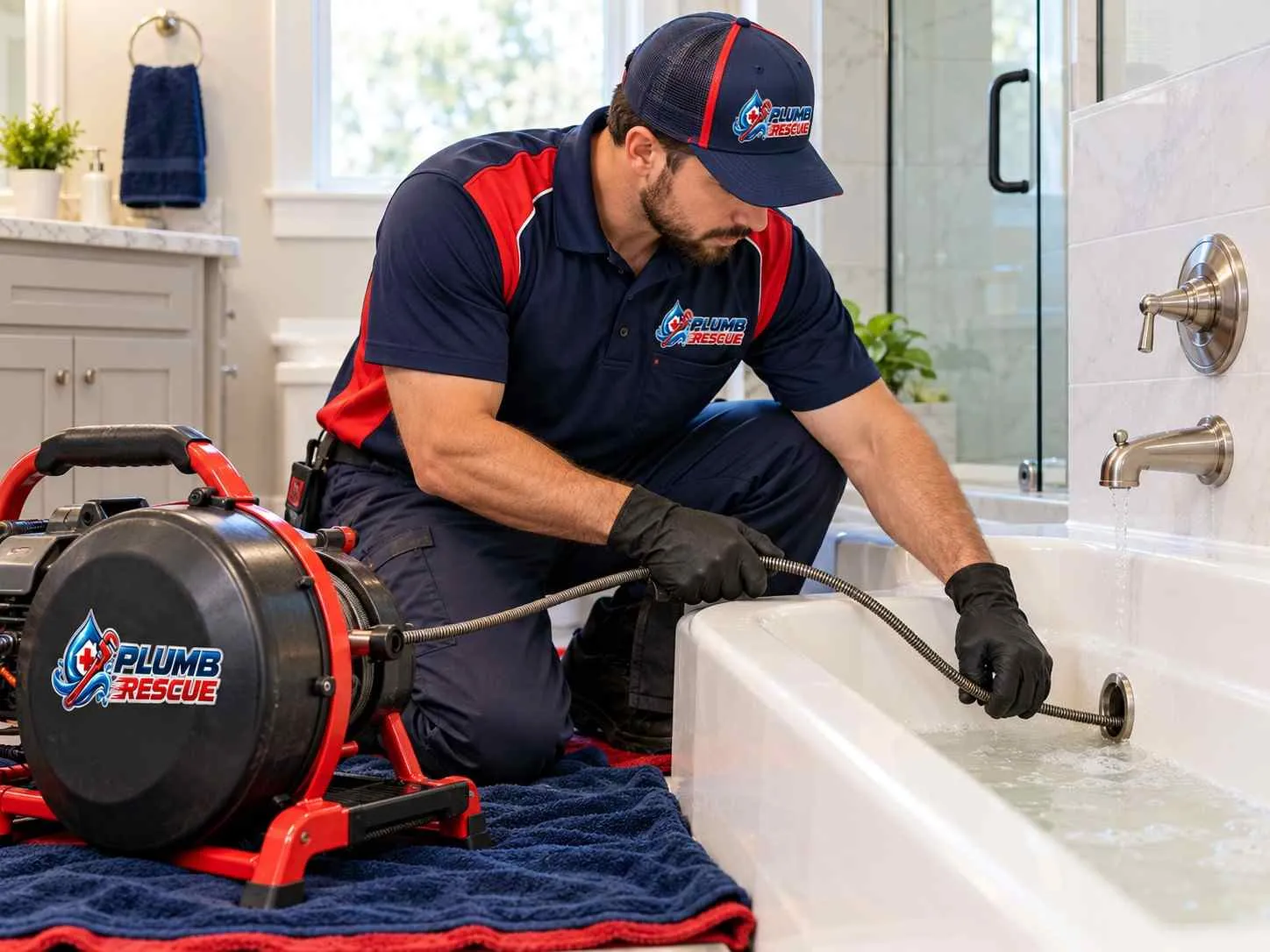
A clogged shower can leave water pooling around your feet. The drain opening and downstream branch may need different clearing approaches.
A tub that empties slowly or holds water can have a restriction near the waste assembly or farther along its drain.
Fixture Downtime
A fixture may still receive water even though its drain cannot carry it away. Continued use can turn a slow drain into an overflow.
A kitchen or bathroom sink filled with standing water cannot support normal washing and cleaning.
Water accumulating in a shower can reach the threshold and surrounding floor. Stop adding water until the obstruction is assessed.
A drain that clears briefly and stops again may have remaining buildup or a restriction beyond the opening.

Clearing Process
The clearing approach depends on fixture design, available access and the suspected obstruction. The contractor explains the scope before proceeding.
The plumber establishes which sink, shower or tub is affected and checks the reported drainage behavior.
A stopper, trap or suitable service opening may provide access, depending on the fixture and pipe layout.
The contractor determines whether the blockage appears near the fixture or farther along its local branch.
Appropriate mechanical clearing or other suitable methods may remove the obstruction without unnecessary disturbance to the fixture.
The contractor checks drainage after clearing and considers whether remaining symptoms indicate a wider problem.
Clearing Options
A shallow obstruction and a deeper restriction call for different access decisions. Ask which method suits the pipe and fixture.
Debris at the drain opening or stopper assembly may be reachable without work farther along the drainage line.
A restriction within an accessible sink trap may require controlled removal and inspection by the contractor.
A blockage beyond the trap may need suitable professional clearing equipment and a usable access point.
If clearing restores flow only briefly, the contractor may recommend further inspection instead of repeating the same work.
Before Clearing
Keep the affected fixture out of use while arranging help. Do not deliberately add more water to test a drain that is already overflowing.
Avoid running the tap or using equipment that empties into the blocked fixture.
Do not mix drain products or add more cleaner to standing water. Tell the plumber if any chemical product has already been used.
Keep nearby belongings away from pooling water and prevent unnecessary access to the affected fixture.
Tell the contractor if other drains already show symptoms. A shared backup needs a different assessment.
Read about multiple blocked drains if the restriction may extend beyond one fixture.
Wastewater returning through several fixtures may require sewer backup service, rather than another local clearing attempt.
Obstruction Types
The material trapped in the drain affects how it can be removed. The following examples do not confirm the cause of your blockage.
Hair can collect around a stopper or strainer and bind with other debris, reducing flow through a bathroom drain.
Fats and food residue can accumulate within kitchen drainage. Repeated blockage may suggest material remains beyond the opening.
Soap deposits can narrow the water path, particularly when combined with hair and other material.
An object dropped into a drain may lodge at a bend. The contractor assesses retrieval options rather than pushing it farther downstream.

Drain Evidence
Describe how the affected fixture behaved during normal use before the problem became urgent. Do not recreate an overflow to collect evidence.
Explain whether drainage slowed gradually or stopped suddenly. The timing can help narrow the assessment.
Report whether standing water remains or slowly falls after the fixture is no longer in use.
Tell the plumber if the same fixture has been cleared recently and how soon the blockage returned.
Mention any disposal, dishwasher or other equipment that normally discharges through the affected sink connection.
Local Scope
A local obstruction does not establish a sewer failure. Bradenton's wastewater improvement plan addresses public infrastructure; a contractor must assess whether your problem lies in private drainage.
If other fixtures drain normally, start with the affected drain. That pattern supports, but does not prove, a localized restriction.
Two connected fixtures can share a restricted branch without the entire property losing drainage.
Customers in Samoset can confirm coverage at their address when requesting help with private drainage.
If several low outlets return wastewater, report that pattern immediately rather than requesting another sink-only clearing.

Drain Questions

Often, if an accessible obstruction can be removed and the drainage assembly remains sound. Damage or inaccessible restrictions may require a different scope.
Remaining grease, debris or a restriction farther along the branch may contribute. Explain the history to the contractor before another clearing attempt.
No. The appropriate method depends on access, pipe condition and obstruction type. A contractor should explain the proposed method and its suitability.
It can if the dishwasher discharges into the same restricted drainage connection. Avoid using the appliance until the blockage is assessed.
Give the product name and approximate time of use if known. Avoid adding other products, and warn the contractor before they handle the drain.
Restore Drainage
Call (941) 304-0879 to describe the affected fixture and whether other outlets still drain. Plumb Rescue accepts emergency plumbing assistance requests 24/7 and helps connect you with independent contractors.